Animation has been a significant part of film and television for over a century. From hand-drawn sketches to computer-generated imagery (CGI), animation has continually evolved, influencing the entertainment industry and inspiring audiences of all ages. It is more than just a medium for cartoons—it is a storytelling tool that brings imagination to life.
In this article, we will explore the evolution of animation in film and television, highlighting key milestones and technological advancements.
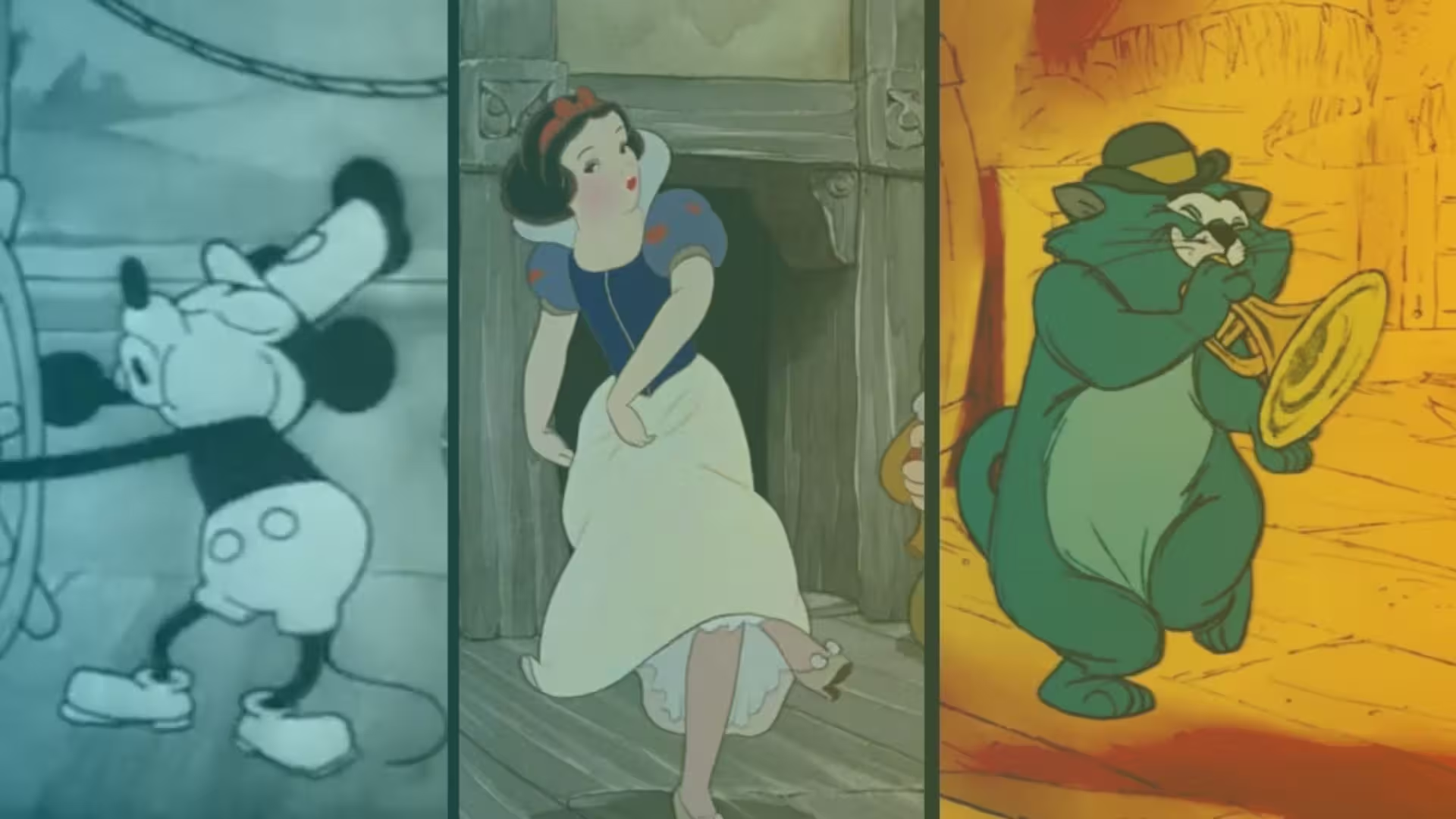
1. The Early Days: Hand-Drawn Animation
The origins of animation date back to the early 20th century, when animators drew sequences by hand to create motion.
How It Worked:
- Each frame was drawn individually on paper or celluloid sheets.
- Animators used techniques like stop-motion or flipbooks to simulate movement.
- Classic examples include Steamboat Willie (1928) featuring Mickey Mouse.
Hand-drawn animation laid the foundation for storytelling and visual creativity in films and cartoons.
2. The Golden Age of Animation
The 1930s to 1950s is considered the Golden Age of Animation. Studios like Disney, Warner Bros., and MGM created iconic characters and feature films.
Key Developments:
- Snow White and the Seven Dwarfs (1937) became the first full-length animated feature.
- Looney Tunes and Tom & Jerry entertained audiences with short animated films.
- Technicolor improved the visual appeal of animated content.
This era solidified animation as a major form of entertainment worldwide.
You Can Also Read: music-mood-mental-health
3. Television Animation
The 1950s and 1960s introduced animation to television, making it accessible to a wider audience.
How It Changed Entertainment:
- Studios produced shows with lower budgets and simpler animation techniques for TV.
- Popular series like The Flintstones and The Jetsons became household names.
- TV animation focused on episodic storytelling suitable for children and families.
Television brought animation into homes, increasing its popularity and cultural impact.
4. The Rise of Computer Animation
The late 20th century saw the introduction of computer-generated imagery (CGI), revolutionizing animation.
Key Innovations:
- 3D modeling and digital rendering created realistic visuals.
- Pixar’s Toy Story (1995) became the first full-length 3D animated film.
- CGI allowed animators to experiment with new styles, effects, and storytelling techniques.
Computer animation expanded creative possibilities and attracted audiences of all ages.
5. Advances in Technology and Techniques
Animation continues to evolve with new technologies and techniques, blending traditional and digital methods.
Examples:
- Motion capture captures real human movement for lifelike characters.
- 2D and 3D hybrid animation combines hand-drawn and CGI elements.
- Virtual reality (VR) and augmented reality (AR) provide immersive animated experiences.
These innovations enhance visual storytelling, allowing creators to push the boundaries of imagination.
6. Global Influence of Animation
Animation is no longer limited to Hollywood. Studios worldwide have made significant contributions.
Examples:
- Japanese anime, like Dragon Ball and Spirited Away, has a massive global fanbase.
- European studios experiment with unique visual styles and artistic narratives.
- Streaming platforms have made international animated content accessible to global audiences.
The international growth of animation has enriched storytelling and diversified creative approaches.
7. Impact on Storytelling and Culture
Animation allows storytellers to explore worlds and ideas that may be impossible in live-action films. It appeals to all ages, conveying emotions, humor, and moral lessons.
How It Works:
- Fantasy worlds and imaginative characters capture the audience’s attention.
- Animation can tackle serious topics in a way that is approachable for children and adults.
- Cultural references and storytelling techniques shape social and artistic trends.
The medium has a lasting influence on popular culture and entertainment.
8. The Future of Animation
The future of animation promises even more innovation and creativity. Emerging technologies and platforms continue to redefine what is possible.
Future Trends:
- AI-assisted animation for faster and more efficient production.
- Interactive storytelling where viewers influence the narrative.
- Expanded use of VR and AR for immersive animated experiences.
Animation will continue to grow as a versatile and evolving medium, captivating audiences for generations to come.
Animation in film and television has come a long way—from hand-drawn sketches to advanced CGI and immersive experiences. It continues to entertain, inspire, and innovate, proving that imagination has no limits. With technology evolving rapidly, the future of animation is full of exciting possibilities.
For more insights on how creative industries and technology shape entertainment, you can check Resultat Pmu for practical guidance and examples.